Your cat has a heart murmur. Here is the only rapamycin trial ever run in cats.
Hypertrophic cardiomyopathy is the most common heart disease in cats, it usually arrives without symptoms, and it is the one place where feline geroscience has actually been tested. What the evidence supports — and what it does not.
Our Beloved Friends Research · July 15, 2026 · 11 min read
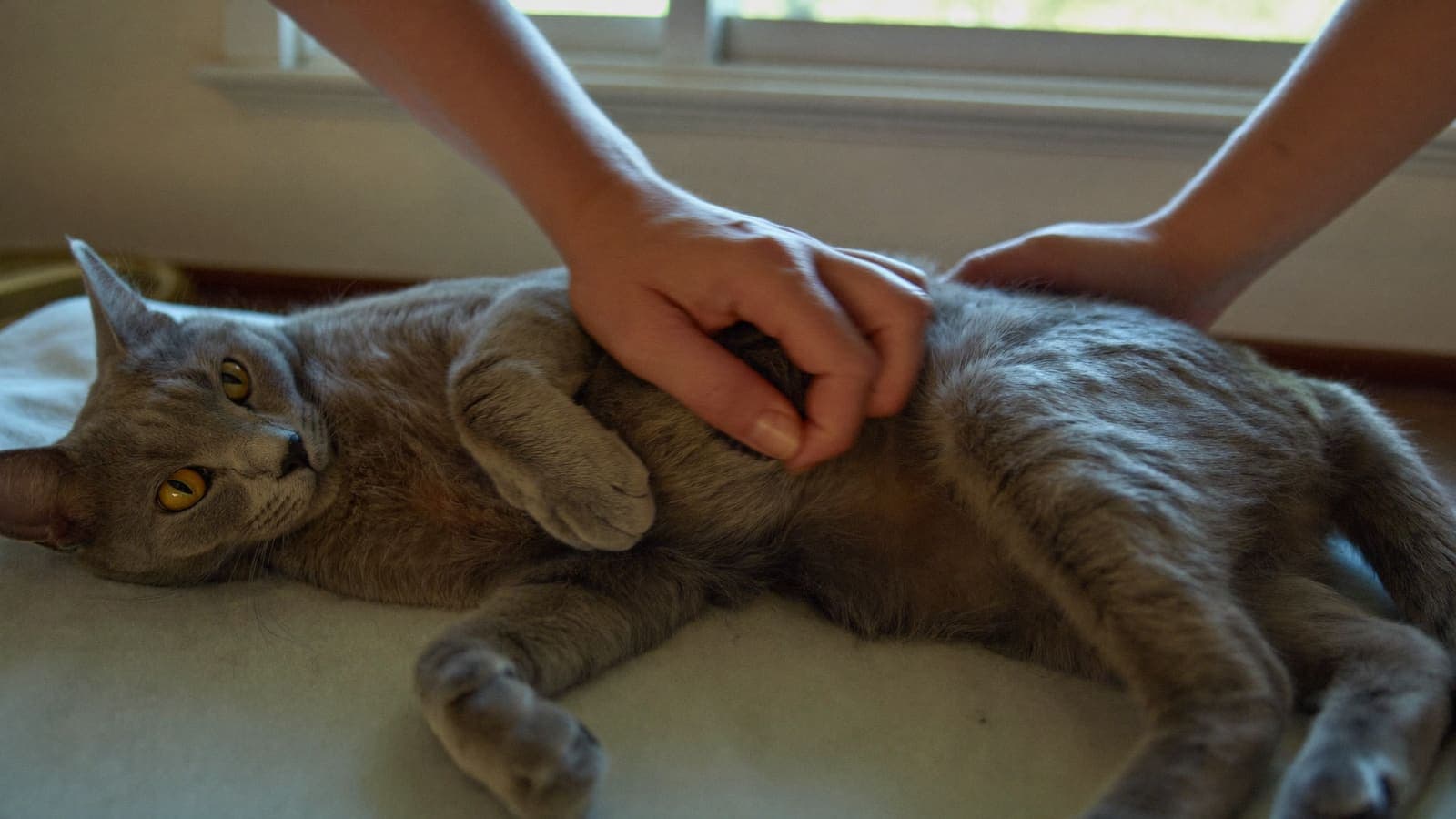
Your veterinarian put a stethoscope on your cat, paused a moment longer than felt comfortable, and said there was a murmur. Then you came home and started searching, which is almost certainly how you got here.
Here is the useful thing to know first, before the frightening things: a murmur is a sound, not a diagnosis. Plenty of cats with murmurs have structurally normal hearts. And — this is the part that unsettles cardiologists — plenty of cats with serious heart disease have no murmur at all. The sound is a reason to look. It is not the answer.
What HCM actually is
Hypertrophic cardiomyopathy is the most common heart disease in cats. The muscular wall of the left ventricle thickens. A thicker wall sounds like a stronger pump, and it is not: the chamber inside gets smaller and stiffer, so it fills less well, and pressure backs up behind it.
Most cats with HCM are subclinical for a long time. They are not coughing, they are not obviously unwell — they are, from the sofa's point of view, a completely normal cat. That is precisely what makes it frightening, because the ways HCM announces itself are all bad ones:
- Congestive heart failure — fluid backing up into or around the lungs.
- Arterial thromboembolism (ATE), the "saddle thrombus" — a clot lodging where the aorta divides, usually paralysing the hind legs, suddenly and with severe pain. This is a genuine emergency and it is as awful as it sounds.
- Sudden death, sometimes with no warning at all.
Some breeds carry real genetic risk. Maine Coons and Ragdolls each have a well-characterized mutation in the MYBPC3 gene, and genetic testing exists for both. A negative test does not mean a cat cannot develop HCM — the disease has causes beyond those two mutations — but if you have one of these breeds, this is a conversation to have early rather than late.
How it actually gets diagnosed
Echocardiography. An ultrasound of the heart, ideally by someone who does a lot of them. That is the diagnosis. Everything else is triage.
A blood test called NT-proBNP can help decide whether a murmur is worth pursuing with imaging, and it is a reasonable first step when cost is a real constraint — which for most people it is, and there is no shame in saying so. But it screens; it does not diagnose.
If you take one practical thing from this article, take this: ask for an echocardiogram, not reassurance. A murmur that turns out to be nothing costs you an appointment. A subclinical HCM that nobody looked for costs you the cat.
Where the longevity literature enters — honestly
Now the part you came for.
mTOR is the pathway that tells a cell to grow rather than repair itself. Pathological thickening of heart muscle — hypertrophy — is, at the cellular level, a growth process. That is not a metaphor. It is why anyone thought to point an mTOR inhibitor at this disease in the first place, and it is why the idea is scientifically respectable rather than wishful.
That reasoning produced RAPACAT: a randomized, double-blind, placebo-controlled trial of delayed-release rapamycin in cats with subclinical HCM. Client-owned cats, not laboratory animals.
Read what it was designed to answer, because it matters enormously: it was a safety and tolerability trial. The finding was that once-weekly delayed-release rapamycin was tolerated at the doses studied.
That is it. That is the whole result.
It was not a trial showing rapamycin reverses hypertrophy. It was not a trial showing cats lived longer. It was not a trial in healthy cats. Anyone telling you rapamycin treats feline heart disease is describing a trial that has not been run.
So why does it matter at all?
Because of what is missing everywhere else.
Cats are the most under-studied companion animal in medicine. Nearly all of the geroscience evidence — the mouse lifespan data, the randomized trial in 24 dogs, the human immune trials — was generated in some other species. When someone talks confidently about rapamycin in cats, they are almost always extrapolating from dogs, and cats are not small dogs. They metabolize drugs differently. That extrapolation is exactly how well-meaning owners hurt their animals.
RAPACAT is one of the very few places where somebody actually ran the controlled trial in the species. It is thin evidence. It is also real evidence, in cats, which is more than can be said for essentially everything else marketed to cat owners.
That is the honest summary: not a treatment, but not nothing either. A door that has been opened a crack, by people who did the work properly.
What actually helps a cat with HCM right now
None of what follows is exotic, and all of it has better support than any longevity compound:
- A cardiologist, and repeat imaging. Subclinical HCM is a monitoring problem. Knowing which direction the heart is going changes decisions.
- Clot prevention where the risk warrants it. Clopidogrel outperformed aspirin for preventing recurrent thromboembolism in cats that had already had one. If your cat is at risk, this is a specific conversation to have, by name.
- Treatment of heart failure if it develops — diuretics, and the rest. This is not the place to improvise.
- Keeping your cat lean, and stress low. Unglamorous, free, and better evidenced than anything on our compound shelf.
What to do next
Get the echocardiogram. Take the genetic test seriously if you have a Maine Coon or a Ragdoll. And if you want to raise the geroscience literature with your veterinarian — which is a perfectly reasonable thing to want — go in with the actual paper rather than a headline.
Our evidence quiz will tell you which studies genuinely apply to your cat, what should stop the conversation cold, and exactly what to ask in the consult room. It takes five questions and it recommends nothing.
Rapamycin is a prescription drug. It is not a supplement, the dose is not something to guess at, and a cat in heart failure is not an animal to experiment on.
Not veterinary advice. Not intended to diagnose, treat, cure, or prevent any disease.
References
- Fries R.C. et al. Safety and tolerability of delayed-release rapamycin in cats with subclinical hypertrophic cardiomyopathy (RAPACAT). Find on PubMed
- Fox P.R. et al. International collaborative study to assess cardiovascular risk and evaluate long-term health in cats with preclinical hypertrophic cardiomyopathy (REVEAL). Find on PubMed
- Hogan D.F. et al. Secondary prevention of cardiogenic arterial thromboembolism in the cat: the FATCAT study. Find on PubMed
- Meurs K.M. et al. A cardiac myosin binding protein C mutation in the Maine Coon cat with familial hypertrophic cardiomyopathy. Find on PubMed
Compounds in this article
- Rapamycin (sirolimus)Emerging evidenceStudied for healthy aging, cardiac function, and immune resilience. A prescription drug — veterinary supervision is not optional.
The content on this site is for informational purposes only and is not veterinary advice. These statements have not been evaluated by a food or drug regulatory authority and are not intended to diagnose, treat, cure, or prevent any disease. Always consult a licensed veterinarian about your pet's health.