Urolithin A: the mitochondrial-renewal compound with real human trials
A gut metabolite of pomegranate became one of the few longevity ingredients with replicated randomized human data. Here's the mechanism, the trials, and the honesty line.
Our Beloved Friends Research · June 3, 2026 · 9 min read
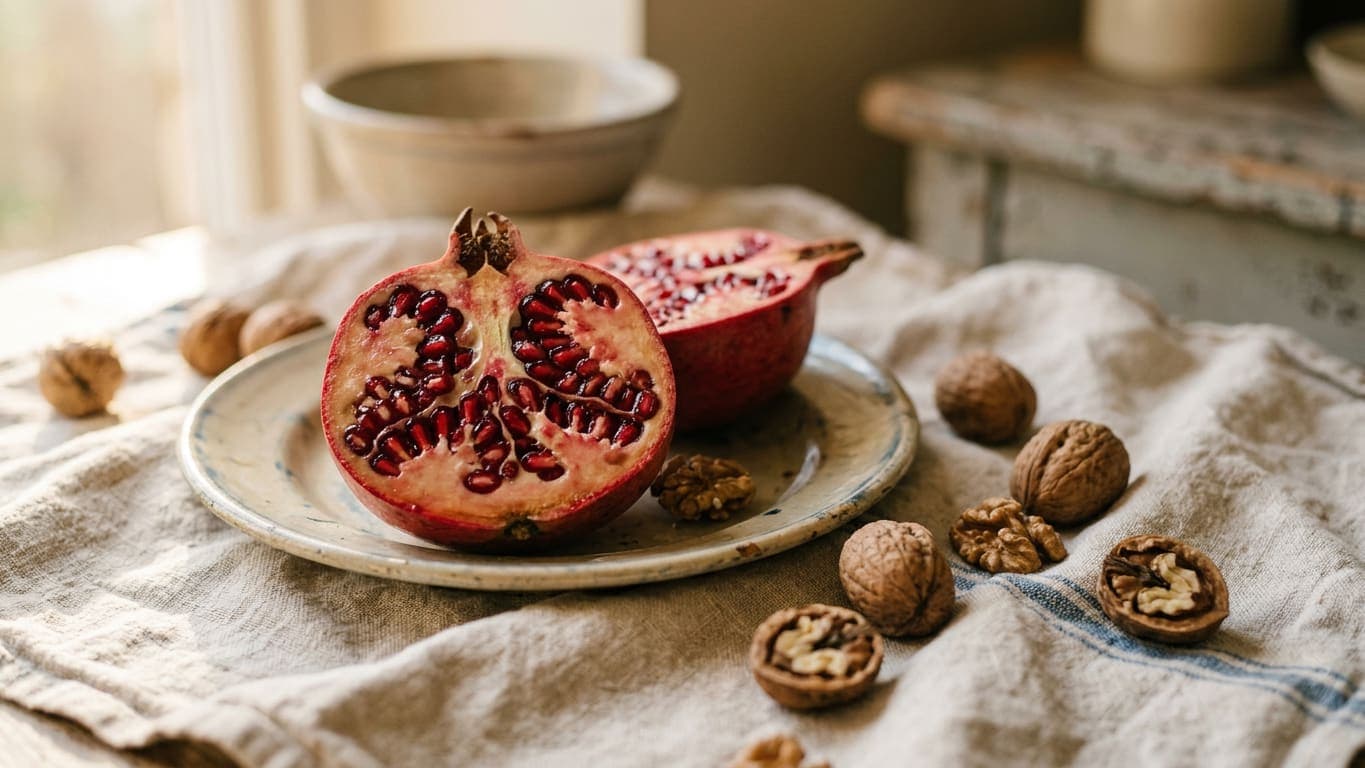
Urolithin A is not something you eat directly. Your gut bacteria make it from ellagitannins in foods like pomegranate, walnuts, and berries — and not everyone's microbiome produces it efficiently. Estimates suggest a large fraction of adults convert poorly, which is a big part of why supplementing the finished metabolite is interesting rather than just "eat more pomegranate."
The mechanism: mitophagy
Mitochondria are the cell's power plants, and like any hard-working machinery they accumulate damage. Healthy cells dispose of worn-out mitochondria through mitophagy — a targeted form of autophagy. With age, mitophagy slows, damaged mitochondria pile up, and tissues with high energy demand (muscle, in particular) feel it first.
Urolithin A's headline action is restarting that housekeeping. In preclinical work it improved mitochondrial function and muscle performance in aged animals and model organisms; the translational question was whether the same signal appears in a living human on an oral dose.
The human evidence
This is where urolithin A separates from most of the longevity shelf.
- First-in-human safety and biomarkers. Single doses and four weeks of repeated dosing at 250–1000 mg were well tolerated in sedentary older adults. Urolithin A and its metabolites were bioavailable in plasma, and 500 mg and 1000 mg doses modulated plasma acylcarnitines and skeletal-muscle mitochondrial gene expression — a molecular signature of improved mitochondrial health (Andreux et al., Nature Metabolism, 2019).
- Randomized functional outcomes. In middle-aged adults, four months of urolithin A produced roughly a 12% gain in muscle strength, clinically meaningful improvements in aerobic endurance and a six-minute walk test, and reductions in plasma C-reactive protein — a marker of inflammation (Singh et al., Cell Reports Medicine, 2022). Notably, the trial's single primary endpoint (peak power) did not reach significance — we mention that because leaving it out would be exactly the kind of selective reporting we're against.
Replicated, randomized, placebo-controlled human data is the exception in this field. Urolithin A has it, which is why it earns a strong human evidence badge.
The honesty line
Here is the careful part. Every trial above was run in humans. Aging biology — mitochondrial turnover, mitophagy signaling — is broadly conserved across mammals, which is the scientific basis for taking the compound seriously in dogs and cats at all. But the pet-specific clinical base is far smaller than the human one, and we are not going to pretend otherwise.
What the evidence supports: mitochondrial health and muscle function. Not a treatment for any disease. Talk to your veterinarian before giving your pet anything, and see how we grade the evidence.
References
Compounds in this article
- Urolithin AStrong human evidenceSupports mitochondrial health and muscle function.
The content on this site is for informational purposes only and is not veterinary advice. These statements have not been evaluated by a food or drug regulatory authority and are not intended to diagnose, treat, cure, or prevent any disease. Always consult a licensed veterinarian about your pet's health.