Cats are not small dogs: why feline drug safety is its own science
The most dangerous four words in pet health are “just a smaller dose.” Cats have a specific gap in how they process drugs, and it is why a compound that is fine for a dog can kill a cat.
Our Beloved Friends Research · July 16, 2026 · 10 min read
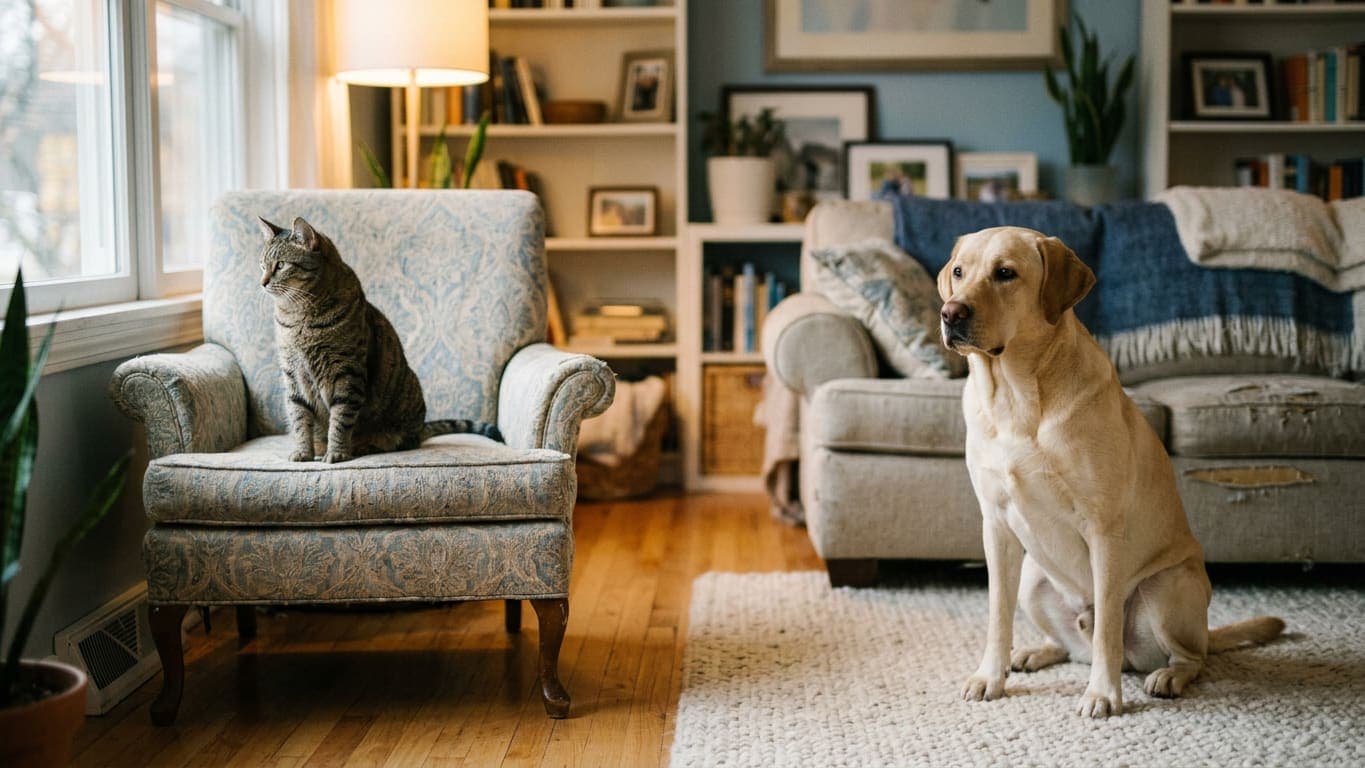
There is a habit of mind that hurts cats, and it is worth naming plainly: treating a cat as a small dog. It shows up every time someone reaches for the dog's supplement, or the human's, and gives "a little bit, adjusted for weight." For a whole class of substances, that reasoning is not merely imprecise. It is dangerous.
The reason is not folklore. It is a specific, well-characterised quirk of feline biochemistry, and once you understand it, a lot of otherwise arbitrary-seeming warnings snap into a single clear picture.
The missing enzyme
Your liver detoxifies many drugs and plant compounds by a process called glucuronidation — attaching a sugar-acid group to a substance so it becomes water-soluble and can be flushed out. It is one of the body's main disposal routes, run by a family of enzymes called UGTs.
Cats are deficient in a key glucuronidation pathway. They carry far less of certain UGT enzyme activity than dogs or humans do (Court & Greenblatt, on feline UGT deficiency; Shrestha et al., feline drug metabolism). This is almost certainly an evolutionary legacy of being an obligate carnivore: a pure meat-eater rarely encountered the plant toxins that pushed other species to keep those enzymes sharp, so the machinery was allowed to decay.
The consequence is simple and severe. A substance the cat needs to clear by glucuronidation lingers — building up to concentrations that would be harmless in a dog and are toxic in a cat.
The textbook case: paracetamol
The clearest illustration is paracetamol (acetaminophen). In humans it is the routine painkiller in the bathroom cabinet. In cats it is a poison. Because cats cannot efficiently glucuronidate it, the drug is shunted down an alternative route that generates a toxic metabolite, which destroys red blood cells and damages the liver. A single tablet can kill a cat.
Nobody looks at that and thinks "give a smaller dose." Paracetamol is not a dosing problem in cats; it is a pathway problem. And it is the loud, famous member of a quiet family.
Why this generalises to supplements
Here is the part that matters for anyone reading about longevity compounds. Many plant polyphenols and "natural" supplement ingredients are cleared, in part, by glucuronidation. That includes compounds people cheerfully discuss giving to pets.
So when you see a longevity supplement formulated for dogs, and think "I'll give my cat a bit," you are making an assumption the cat's liver may not honour: that the cat can clear it the way a dog can. Sometimes that is fine. Sometimes it is not, and the margin for error in a small obligate carnivore is thin.
This is exactly why, on this site, the feline evidence for every compound is treated as thinner and more cautious than the canine evidence — not as a disclaimer, but as a real reflection of biology. It is also why the one controlled rapamycin trial in cats matters so much: someone actually ran it in the species, rather than assuming the cat is a scaled-down dog.
The short list every cat owner should know
Beyond the glucuronidation story, cats have a set of specific, non-negotiable hazards. Keep these entirely away from cats:
- Paracetamol (acetaminophen) — as above. Never.
- Allium — onion, garlic, chives, leek — damages feline red blood cells. "Garlic for pets" products are not for cats.
- Xylitol — the sweetener in sugar-free gum and some supplements and peanut butters.
- Essential oils, many of them, applied or diffused heavily — the same UGT deficiency makes cats poor at clearing certain oil constituents.
- Human and dog supplements given "adjusted for weight" — the whole point of this article. Weight adjustment does not fix a pathway difference.
If it is not formulated and dosed for a cat, by someone who knows feline metabolism, the safe default is: not without your veterinarian.
The honest frame
None of this is anti-cat, and it is certainly not a reason to despair of helping an ageing cat. It is a reason to hold feline claims to a higher standard of evidence than canine ones, because the biology is less forgiving and the studies are fewer.
That is not a limitation we apologise for. It is the correct posture. A site that treated cats as small dogs would be easier to write and would occasionally get an animal killed.
Our evidence quiz applies exactly this caution: choose a cat, and it flags the thin-evidence problem explicitly rather than pretending the dog data carries across.
Not veterinary advice. Never give your cat a medication or supplement — human, canine, or "natural" — without your veterinarian.
References
- Court M.H. Feline drug metabolism and disposition: pharmacokinetic evidence for species differences and molecular mechanisms. Veterinary Clinics of North America: Small Animal Practice, 2013. Find on PubMed
- Court M.H., Greenblatt D.J. Molecular basis for deficient acetaminophen glucuronidation in cats. Biochemical Pharmacology, 1997. Find on PubMed
- van Beusekom C.D. et al. Feline hepatic biotransformation of differently substituted phenolic compounds. feline UGT. Find on PubMed
The content on this site is for informational purposes only and is not veterinary advice. These statements have not been evaluated by a food or drug regulatory authority and are not intended to diagnose, treat, cure, or prevent any disease. Always consult a licensed veterinarian about your pet's health.