Feline stomatitis: one of the most painful diseases in cats, and why rapamycin isn't the answer
Chronic gingivostomatitis leaves a cat with a mouth too sore to eat. It is genuinely awful, genuinely treatable, and a magnet for immune-modulation claims that have never been tested in cats.
Our Beloved Friends Research · July 20, 2026 · 9 min read
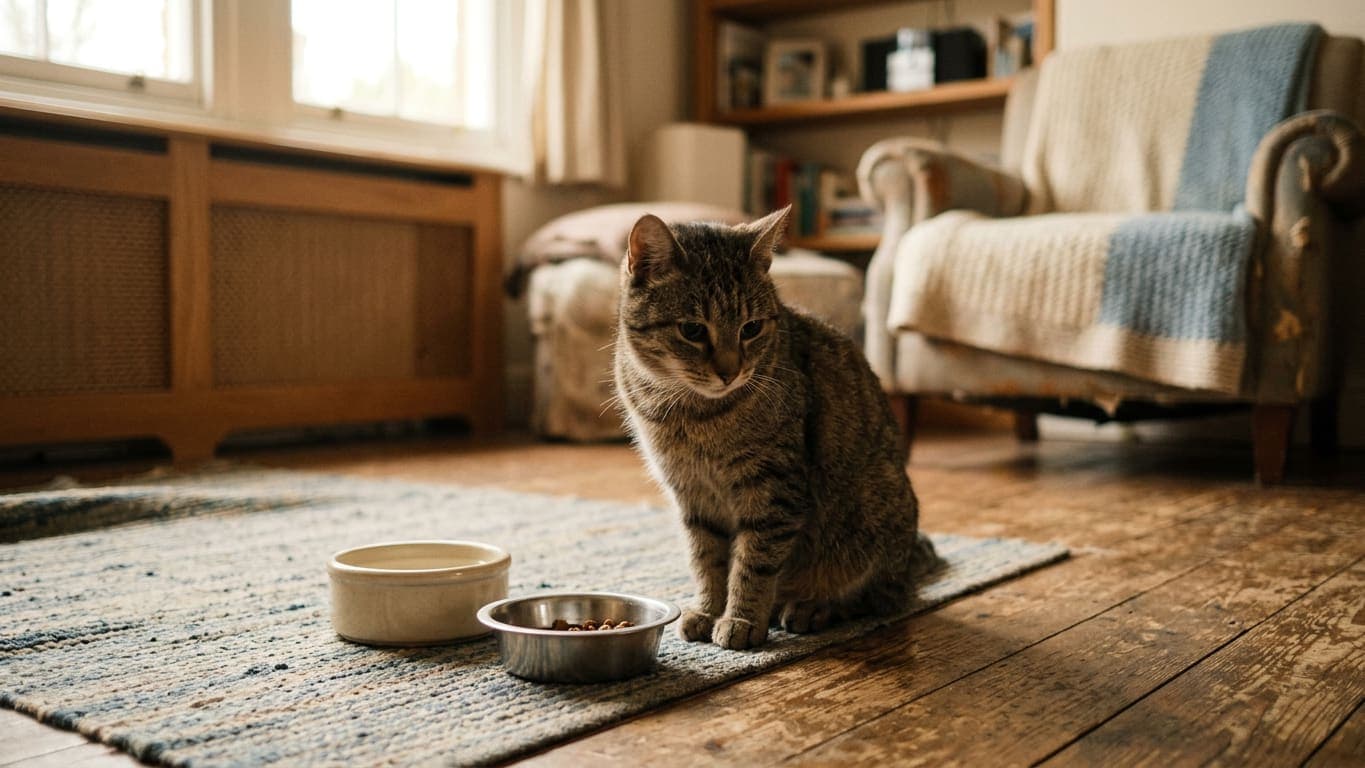
A cat with feline chronic gingivostomatitis (FCGS) approaches the food bowl, clearly hungry, and then backs away. Cries while eating. Drops food. Drools, sometimes with blood. Stops grooming, because grooming means putting a painful mouth to work.
Veterinary dentists consistently describe this as among the most painful conditions they see in cats. If you are reading this at 1am because your cat won't eat, get to a vet — this is not a wait-and-see disease.
What it is
FCGS is a severe, chronic inflammation of the gums and the tissues at the back of the mouth. It is not ordinary dental disease: the immune system mounts a disproportionate inflammatory response, and the mouth becomes raw, red, ulcerated, and exquisitely sore.
The cause isn't fully settled. It appears to involve an over-reaction to plaque and oral bacteria, with viral involvement (calicivirus is commonly implicated) and an underlying immune dysregulation. Cats with FIV or FeLV are over-represented.
Signs: pain on eating, dropping food, preferring soft food or refusing to eat, drooling, blood-tinged saliva, pawing at the mouth, weight loss, a neglected coat, bad breath, hiding, and irritability. Any of these deserve an oral examination.
What actually works
This is the part that matters, because the effective treatment is well-established and frequently delayed while owners try gentler-sounding options.
Full-mouth or partial-mouth tooth extraction is the most effective treatment. It sounds drastic. It is also the intervention with the best evidence: across case series, a large majority of cats improve substantially or resolve entirely after extraction of the teeth behind the canines — or all teeth — with many needing no further medication (Jennings et al., JAVMA, 2015).
The logic: removing the teeth removes the plaque-retentive surfaces the immune system is over-reacting to. Cats manage remarkably well without teeth — they eat, they thrive, and most importantly they stop hurting.
Other options your vet may discuss: meticulous dental cleaning and home care in mild cases, immunomodulatory or anti-inflammatory medication (including steroids, though long-term use has costs), interferon, ciclosporin, and — an area of active interest — mesenchymal stem cell therapy, which has genuine early feline trial work behind it for refractory cases.
Pain control throughout. Non-negotiable. A cat with this disease is in real pain and deserves proper analgesia while the plan is worked out.
The rapamycin claim
The claim: that rapamycin rebalances an over-activated immune system, bringing chronic oral and gingival inflammation under control.
There is no controlled trial of rapamycin for feline stomatitis. Not a small one, not a pilot.
The reasoning behind the claim isn't fabricated — mTOR inhibition genuinely modulates immune signalling, and low-dose mTOR inhibition improved immune measures in older humans. But there is a wide gap between "modulates immune signalling" and "treats a complex, painful, multifactorial oral disease in cats." The only controlled feline rapamycin trial that exists was in cats with subclinical heart disease and measured tolerability.
And cats specifically punish extrapolation. They metabolise many drugs differently from dogs and humans, so borrowing confidence from other species is exactly the error that hurts them.
There is also a timing argument that matters more than the pharmacology: FCGS has an effective treatment. Spending months on an unproven immune-modulation approach while a cat's mouth stays raw is a cost paid in that cat's pain.
What to do
See a vet, ideally one comfortable with feline dentistry, and ask directly about extraction. Get pain relief started. Have FIV/FeLV status checked. Treat this as urgent, because from the cat's side it is.
The cat evidence page lays out every rapamycin claim in cats against what has actually been shown, and the quiz will tell you which studies apply to your animal.
Not veterinary advice. A cat that is struggling to eat needs to be seen promptly.
References
- Jennings M.W. et al. Effect of tooth extraction on stomatitis in cats: 95 cases. JAVMA, 2015. Find on PubMed
- Arzi B. et al. Therapeutic efficacy of fresh autologous mesenchymal stem cells for severe refractory feline chronic gingivostomatitis. Stem Cells Translational Medicine. Find on PubMed
- Lee D.B. et al. Feline chronic gingivostomatitis: a review. Journal of Veterinary Dentistry. Find on PubMed
Compounds in this article
- Rapamycin (sirolimus)Emerging evidenceStudied for healthy aging, cardiac function, and immune resilience. A prescription drug — veterinary supervision is not optional.
The content on this site is for informational purposes only and is not veterinary advice. These statements have not been evaluated by a food or drug regulatory authority and are not intended to diagnose, treat, cure, or prevent any disease. Always consult a licensed veterinarian about your pet's health.