Chronic kidney disease in cats: the early signs, and why SDMA changed the game
It's the disease most likely to take an old cat, and by the time the classic signs appear, much of the kidney is already gone. Here's how to catch it earlier — and why a blood test called SDMA matters so much.
Our Beloved Friends Research · July 19, 2026 · 10 min read
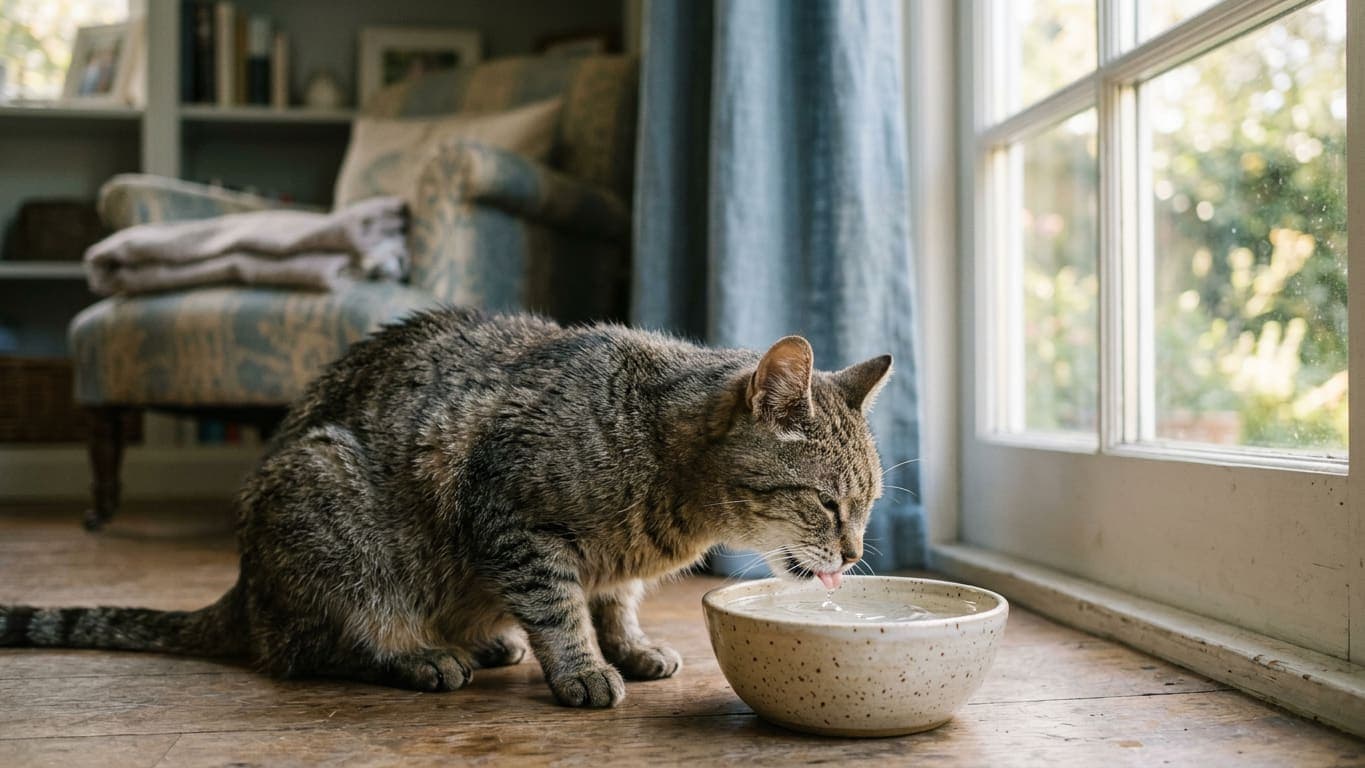
Of all the things that shorten an old cat's life, chronic kidney disease (CKD) is the one most worth understanding early — because it is common, it is progressive, and its cruelty is that it hides. By the time the textbook signs appear, a great deal of kidney function is already, permanently, gone.
That sounds bleak. It is not meant to. The reason to understand CKD is precisely that catching it earlier — before the obvious signs — genuinely changes how long and how well a cat lives. And in the last decade, a blood test made "earlier" possible in a way it never was before.
Why the kidneys hide their decline
Kidneys have enormous spare capacity. A cat can lose a substantial fraction of total kidney function before the classic signs show up at all. The body compensates, and the cat looks fine — until it can't, and doesn't.
This is why the traditional test was such a problem. The standard marker, creatinine, typically doesn't rise above the normal range until roughly three-quarters of kidney function is already lost. By the time creatinine flags the disease, most of the kidney is gone. It is like a fuel gauge that reads "full" until the tank is nearly empty.
The early signs — subtle, then not
The first genuinely noticeable sign is usually drinking and urinating more. The failing kidney can no longer concentrate urine, so the cat produces more dilute urine and drinks to keep up. Owners often notice a bigger, wetter litter tray, or a cat suddenly interested in dripping taps and water glasses.
Then, as it progresses:
- Weight loss and gradual muscle wasting, especially over the spine
- Reduced or picky appetite
- A dull, unkempt coat
- Lethargy — sleeping more, engaging less
- Vomiting, bad breath (a uraemic smell), and nausea in later stages
The trouble is that "drinking a bit more, a little thinner, sleeping more" is also a perfect description of a cat simply growing old — and it overlaps heavily with hyperthyroidism, which can occur at the same time and even mask the kidney disease. This is exactly why guessing is the wrong move and testing is the right one.
SDMA: why the game changed
Around 2015, a blood test called SDMA (symmetric dimethylarginine) entered routine veterinary use, and it matters because it rises earlier than creatinine — flagging kidney decline when a much smaller fraction of function has been lost, sometimes years sooner.
That head start is the whole point. It does not cure anything, but it moves the moment of diagnosis to a stage where diet and management can meaningfully slow what follows. The international kidney-disease staging system (IRIS) now incorporates SDMA precisely because of this.
The practical takeaway is simple: from about age seven, a senior cat's routine bloodwork should include SDMA, not just creatinine. If your vet's panel doesn't mention it, ask.
What actually helps — and it's not rapamycin
Owners sometimes arrive at CKD via longevity reading, hoping a compound like rapamycin might help the kidneys. We wrote a whole honest article on that, and the short version is: the evidence isn't there. The mTOR inhibitors were taken into human polycystic-kidney trials on a sound mechanism and largely disappointed, and there is no controlled rapamycin evidence in feline CKD. Hope is not evidence, and we won't blur them.
What does have evidence:
- Therapeutic renal diets are one of the few interventions shown to slow progression and improve survival in cats already diagnosed. This is the single most impactful thing after early detection.
- Managing the downstream problems — blood pressure, phosphate levels, hydration, protein loss, and any urinary infections — is what a good CKD plan is built from.
- Staging and monitoring through your vet using the IRIS framework, so treatment tracks the disease rather than guesswork.
- Plenty of fresh water, and for many cats, a shift toward wet food to support hydration.
None of that is exotic. All of it beats any longevity compound for this disease.
The bottom line
CKD is common and it hides, but it is not a disease you are helpless against. The two things that change outcomes are both available today: catch it early with SDMA-inclusive senior bloodwork, and manage it properly with a renal diet and your vet's plan. Those are worth far more than anything sold as a longevity fix.
Our evidence quiz flags kidney disease as something to raise with your vet, and points you to what genuinely applies to your cat.
Not veterinary advice. Talk to your veterinarian about screening your cat's kidneys.
References
- Hall J.A. et al. Comparison of serum concentrations of symmetric dimethylarginine and creatinine as kidney function biomarkers in cats with chronic kidney disease. Journal of Veterinary Internal Medicine, 2014. Find on PubMed
- Sparkes A.H. et al. ISFM consensus guidelines on the diagnosis and management of feline chronic kidney disease. Journal of Feline Medicine and Surgery, 2016. Find on PubMed
- Ross S.J. et al. Clinical evaluation of dietary modification for treatment of spontaneous chronic kidney disease in cats. JAVMA, 2006. Find on PubMed
The content on this site is for informational purposes only and is not veterinary advice. These statements have not been evaluated by a food or drug regulatory authority and are not intended to diagnose, treat, cure, or prevent any disease. Always consult a licensed veterinarian about your pet's health.