Hyperthyroidism in cats: the common senior-cat disease that's easy to miss
A cat that's eating well but losing weight, restless, yowling at night, or drinking more — one of the most common explanations in an older cat is an overactive thyroid. It's very treatable, and it's frequently mistaken for “just getting old.”
Our Beloved Friends Research · July 19, 2026 · 9 min read
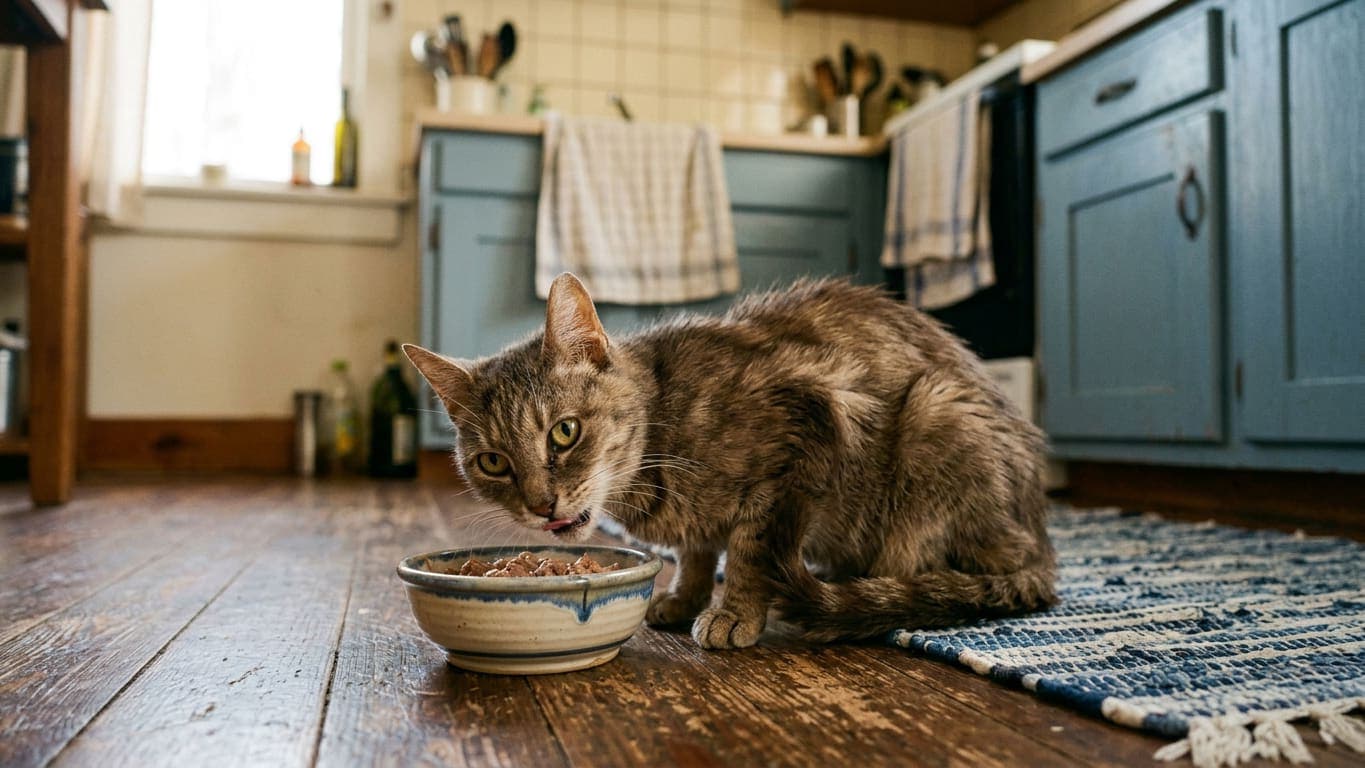
Here is a pattern every experienced cat owner should learn to recognise, because catching it early changes everything: an older cat that is eating well — even ravenously — but losing weight. Add in restlessness, a scruffy coat, drinking more, yowling at night, maybe some vomiting, and you have the classic picture of feline hyperthyroidism.
It is one of the most common hormonal diseases in older cats. And it is one of the most commonly missed, because every one of those signs is easy to wave away as "she's just getting old."
What it is
Two small thyroid glands in the neck produce thyroid hormone, which sets the body's metabolic rate. In hyperthyroidism, they produce far too much — almost always because of a benign (non-cancerous) enlargement. The result is a body running permanently in overdrive: burning through calories, heart racing, everything sped up.
That is why the signature sign is so counterintuitive. The cat is genuinely hungry and genuinely eating, but the overclocked metabolism burns it all and more, so the weight falls off anyway. An owner watching a cat clean its bowl does not suspect illness — which is exactly why the weight loss gets attributed to age.
The signs, in plain terms
Any combination of these in a cat over about seven deserves a vet visit:
- Weight loss despite a good or increased appetite — the hallmark
- Restlessness, hyperactivity, or irritability — a normally placid cat becoming agitated
- Increased thirst and urination
- Yowling, especially at night — this overlaps with feline cognitive dysfunction and other conditions, which is exactly why it needs proper investigation rather than a guess
- A poor, unkempt, or matted coat
- Vomiting or diarrhoea
- A fast heart rate — something your vet will pick up
Why it must not be ignored
Left untreated, all that excess hormone does real damage. The heart is forced to work so hard for so long that it can thicken and fail — untreated hyperthyroidism is a cause of secondary heart disease. It also drives up blood pressure, which can damage the eyes (even causing sudden blindness), kidneys, and brain.
There is also a genuinely tricky interaction worth knowing: hyperthyroidism can mask underlying chronic kidney disease. The overactive thyroid increases blood flow through the kidneys and can make them look better than they are; treating the thyroid sometimes "unmasks" kidney disease that was there all along. This is not a reason to avoid treatment — it is a reason to have a vet manage both together, which they do routinely.
The good news: it's very treatable
This is the part to hold onto. Hyperthyroidism is one of the more treatable serious diseases in cats, with several real options your vet will discuss:
- Radioactive iodine (I-131) — often considered the gold standard. A single treatment that targets and destroys the overactive tissue, frequently curative. Requires a specialist facility and a short hospital stay.
- Anti-thyroid medication (methimazole) — daily, lifelong, as a pill or a gel applied to the ear. Controls the disease rather than curing it, but flexible and widely used.
- Prescription iodine-restricted diet — works by limiting the iodine the glands need, for cats where that approach suits.
- Surgery to remove the glands — less common now, but an option.
Which is right depends on the individual cat, the cost, kidney status, and your circumstances. There is no single correct answer, which is precisely why it is a conversation with your vet.
What this has to do with longevity
Directly, this: you cannot chase the frontier of aging science while missing the common, treatable diseases sitting in front of you. A cat with untreated hyperthyroidism does not need a geroscience compound — it needs a thyroid diagnosis. The most important sentence on this site is that no drug has been shown to extend a cat's life; the second most important is that catching the ordinary diseases early is the intervention with real evidence behind it.
That is why our evidence quiz asks about existing health conditions first, and why every path in it ends at your veterinarian.
What to do
If your older cat is eating well but losing weight — or ticks any of the boxes above — book a vet visit and ask specifically about a thyroid blood test (usually a simple total T4). It is a cheap test for a common, treatable, and otherwise damaging disease. Early is everything.
Not veterinary advice. Please have an older cat with these signs examined by your veterinarian.
References
- Carney H.C. et al. AAFP guidelines for the management of feline hyperthyroidism. Journal of Feline Medicine and Surgery, 2016. Find on PubMed
- Peterson M.E. Hyperthyroidism in cats: what's causing this epidemic of thyroid disease? Journal of Feline Medicine and Surgery, 2012. Find on PubMed
- Williams T.L. et al. Association of iatrogenic hypothyroidism with azotemia and survival in cats with hyperthyroidism. Journal of Veterinary Internal Medicine, 2010. Find on PubMed
The content on this site is for informational purposes only and is not veterinary advice. These statements have not been evaluated by a food or drug regulatory authority and are not intended to diagnose, treat, cure, or prevent any disease. Always consult a licensed veterinarian about your pet's health.