The ageing dog's heart — and the one place a rapamycin trial actually saw something
Heart function is where the canine rapamycin data is least thin. It is also one small study over ten weeks. Here's what happens to an old dog's heart, what to watch for, and how much that finding really carries.
Our Beloved Friends Research · July 21, 2026 · 9 min read
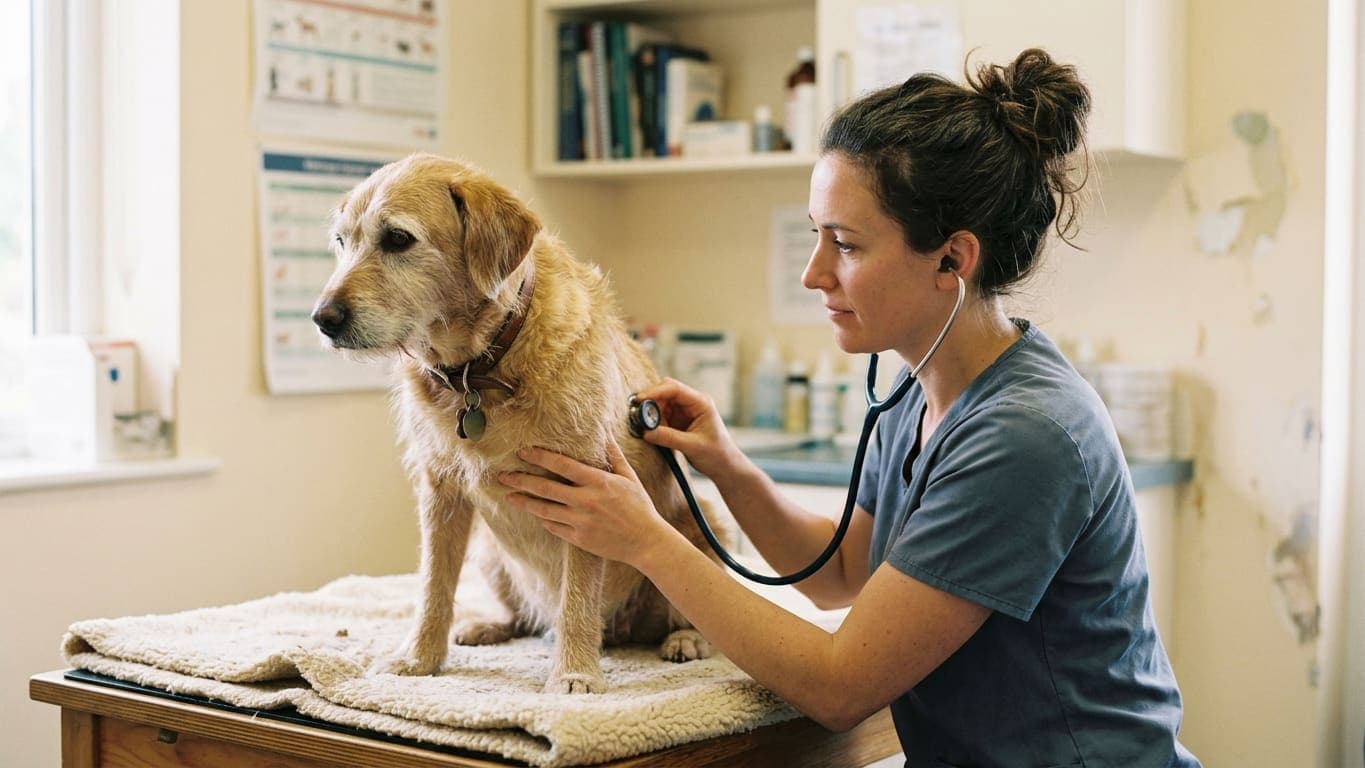
Of everything claimed for rapamycin in dogs, cardiac function is the claim with the most behind it. That is worth saying clearly — and so is the size of what "the most" actually means here: one randomized trial, twenty-four dogs, ten weeks.
What ageing does to a dog's heart
Two things happen with age. The heart muscle stiffens, so the chambers fill less easily. And the wall can thicken, which sounds like strength and is not — a thicker wall usually means a smaller, stiffer chamber doing more work for less output.
Separately, many dogs develop structural heart disease. Myxomatous mitral valve disease is extremely common in small breeds — the mitral valve degenerates and leaks, and a murmur appears long before symptoms do. Dilated cardiomyopathy affects large breeds, where the muscle thins and weakens instead.
Signs worth a vet visit: coughing (especially at night), tiring on walks they used to manage, faster or laboured breathing at rest, fainting or collapse, a swollen abdomen, restlessness at night. A resting respiratory rate that creeps up over weeks is one of the most useful things an owner can track at home.
What the trial actually found
In the 2017 randomized, placebo-controlled trial, middle-aged companion dogs took low-dose rapamycin for ten weeks. It was well tolerated, with no significant excess of adverse events over placebo — and echocardiography showed improvement in age-associated measures of heart function.
That is a real result and it is why this claim is graded higher than the others on the dog evidence page. Now the limits, which matter just as much:
- Twenty-four dogs. Small enough that chance is a live explanation.
- Ten weeks. Nothing about durability, and nothing about lifespan.
- Surrogate measures. Echocardiographic indices improved. That is not the same as dogs living longer, or fewer dogs developing heart failure.
- Healthy middle-aged dogs, not dogs with diagnosed heart disease. This is not evidence for treating an existing cardiac patient.
TRIAD is tracking cardiac outcomes in far more dogs over far longer. Until it reports, "promising signal in a small study" is the honest ceiling.
If your dog already has heart disease
Then this is a cardiology conversation, not a longevity one. Veterinary cardiology has genuinely effective, evidence-backed treatments — pimobendan, ACE inhibitors, diuretics — with real trial data behind them for specific conditions and stages. Those come first, and adding an unproven compound alongside cardiac medication is specifically something to raise with the cardiologist rather than decide alone.
What helps an ageing heart today
- Keep them lean. Excess weight makes the heart work harder, and leanness has the best lifespan evidence in the field.
- Track resting respiratory rate. Count breaths while your dog sleeps; a sustained rise is an early warning of fluid, and vets take this number seriously.
- Don't ignore a murmur. It is a reason to image, not to worry silently. Many dogs live years with a well-managed murmur.
- Regular check-ups from middle age, earlier for large breeds, whose clocks run faster.
Our quiz flags known heart disease as something to raise with your vet before any longevity conversation — and explains why.
Not veterinary advice. Coughing, exercise intolerance, or laboured breathing in a dog needs veterinary examination promptly.
References
- Urfer S.R. et al. A randomized controlled trial to establish effects of short-term rapamycin treatment in 24 middle-aged companion dogs. GeroScience, 2017. Find on PubMed
- Keene B.W. et al. ACVIM consensus guidelines for the diagnosis and treatment of myxomatous mitral valve disease in dogs. Journal of Veterinary Internal Medicine, 2019. Find on PubMed
- Boswood A. et al. Effect of pimobendan in dogs with preclinical myxomatous mitral valve disease (EPIC study). Journal of Veterinary Internal Medicine, 2016. Find on PubMed
Compounds in this article
- Rapamycin (sirolimus)Emerging evidenceStudied for healthy aging, cardiac function, and immune resilience. A prescription drug — veterinary supervision is not optional.
The content on this site is for informational purposes only and is not veterinary advice. These statements have not been evaluated by a food or drug regulatory authority and are not intended to diagnose, treat, cure, or prevent any disease. Always consult a licensed veterinarian about your pet's health.