How to get rapamycin for a dog or cat — the legitimate routes, step by step
It is a prescription drug, so there is no route that skips a veterinarian. Here is how the process actually works, what to ask, and how to tell a careful provider from a careless one.
Our Beloved Friends Research · July 21, 2026 · 9 min read
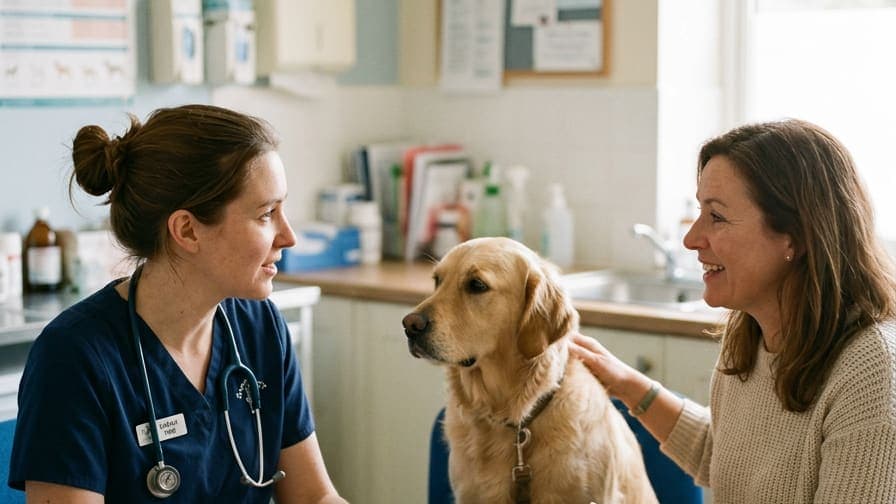
If you have read the evidence and want to talk to someone about actually trying this, the first thing to understand is the thing most pages skip: rapamycin is a prescription drug. Not a supplement, not a nutraceutical. There is no legitimate route that bypasses a veterinarian, and a seller willing to bypass one is telling you exactly how much care they take with everything else.
Here is how it really works.
Route 1: your own veterinarian
Start here. Your vet has examined your animal, knows the history, and can weigh this against everything else going on — which no remote questionnaire can do.
Bring the actual literature rather than a headline. The 2017 randomized trial in 24 pet dogs, the fact that TRIAD is still running, and our clinician-facing summary are a better opening than "I read online that…". A prepared owner gets a better conversation.
Expect some vets to say no, and understand that it is a defensible answer. No drug has been shown to extend a dog's or cat's life. A vet declining to prescribe off-label for an unproven indication is being careful, not obstructive. If they say no, ask why — the reason usually teaches you something about your own animal.
If they are willing, the drug is typically dispensed through a compounding pharmacy so the dose can be matched to your animal's weight. This route is often the cheapest, and there is no middleman.
Route 2: a telehealth provider
If your vet won't engage — and many haven't read this literature — remote services exist that pair a questionnaire with a licensed veterinarian who can prescribe and ship.
The process is broadly the same everywhere: a questionnaire covering species, age, weight and health history; a vet reviewing it; a weight-calibrated prescription; delivery; and follow-up. Our sister brand Rapavie works this way, and so do several competitors. We compare them, with prices, on the cost page.
What to ask any provider before you pay
This is the part worth screenshotting. A careful provider answers all of these without hesitating:
- Is a licensed veterinarian reviewing my animal's history before anything is prescribed? If the answer is anything other than a clear yes, stop.
- Which vet, licensed where? Name and jurisdiction.
- Where is the drug compounded or manufactured, and is there purity testing? Ask to see it.
- What monitoring is included? Baseline bloodwork and follow-up checks are part of doing this responsibly. A cheap price with no monitoring is not cheap — it has just moved the cost onto you later.
- What is the dose based on? It should be weight-calibrated and reference the published protocols, not a one-size capsule.
- What would make you refuse to prescribe? A provider who has no exclusions is not screening anyone. Active infection, immunosuppressive therapy, cancer treatment, upcoming surgery, and pregnancy should all be disqualifying.
- How do I stop, and what does cancelling involve?
Red flags
- Sells rapamycin without a prescription
- Quotes a lifespan percentage for dogs or cats — that number is from mice
- No named veterinarian, or no licence details
- No purity testing, no compounding pharmacy named
- Pressure tactics, countdown timers, "last chance" pricing on a prescription drug
- No exclusion criteria, no bloodwork, no follow-up
Before you start, three things worth doing
Get baseline bloodwork. You cannot detect a change you never measured. This is the single most useful thing an owner can do before starting anything.
Know your animal's stage. Every trial in this field dosed animals in middle age or later, and a giant-breed dog is senior years before a small one. Our quiz works this out and flags the conditions that should stop the conversation.
Read the honest ceiling one more time. No drug has been shown to extend the lifespan of a dog or a cat. TRIAD has not reported. Anyone telling you otherwise — including anyone selling it — is telling you something they do not know.
Not veterinary advice. This describes how the process works; whether it is appropriate for your animal is a decision for a veterinarian who has examined them.
References
- Urfer S.R. et al. A randomized controlled trial to establish effects of short-term rapamycin treatment in 24 middle-aged companion dogs. GeroScience, 2017. Find on PubMed
- Dog Aging Project — TRIAD. dogagingproject.org
Compounds in this article
- Rapamycin (sirolimus)Emerging evidenceStudied for healthy aging, cardiac function, and immune resilience. A prescription drug — veterinary supervision is not optional.
The content on this site is for informational purposes only and is not veterinary advice. These statements have not been evaluated by a food or drug regulatory authority and are not intended to diagnose, treat, cure, or prevent any disease. Always consult a licensed veterinarian about your pet's health.