Cancer in dogs: the real risk, the prevention claims, and what evidence supports
Cancer is a leading cause of death in older dogs, which makes it the area where hopeful claims spread fastest. Here is what actually lowers risk or catches it early — and an honest look at whether rapamycin belongs in that list.
Our Beloved Friends Research · July 20, 2026 · 10 min read
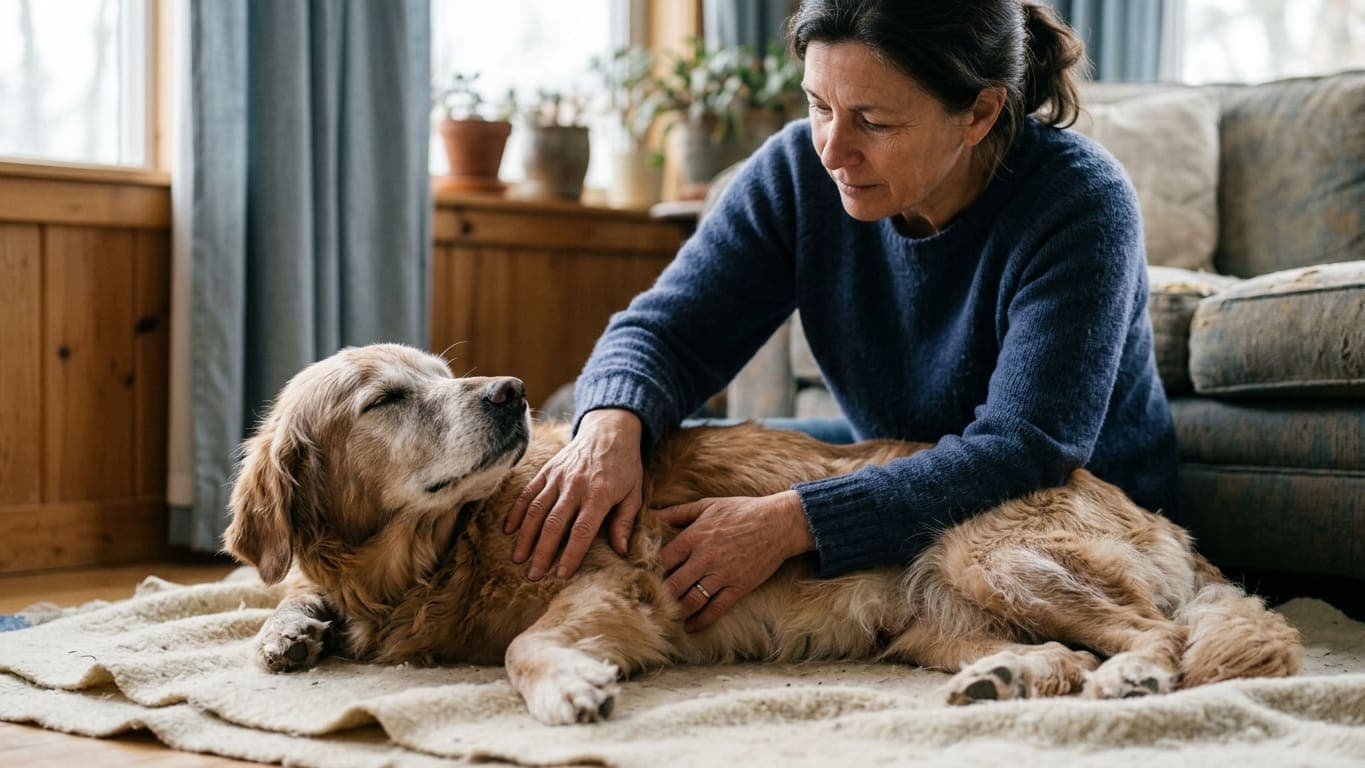
Cancer is one of the leading causes of death in older dogs, and certain breeds carry strikingly high lifetime risk. That combination — common, frightening, and unevenly distributed — makes canine cancer the single easiest area in which to sell hope.
So this article is going to be careful. We will separate what genuinely reduces risk or catches disease early from what is currently being claimed, including about the compound this site writes about most.
What raises and lowers risk
Breed and size. Risk is not evenly spread. Golden Retrievers, Boxers, Bernese Mountain Dogs, and Flat-Coated Retrievers carry well-documented elevated risk for particular cancers. Larger dogs, whose faster growth and higher IGF-1 signalling also drive their shorter lives, face more cancer earlier. You cannot change your dog's breed, but knowing its specific risks changes what you screen for.
Body condition. Obesity is associated with worse outcomes across many diseases, and keeping a dog lean has the best lifespan evidence in the entire field.
Neutering timing. This is genuinely complicated and genuinely important: for some large breeds, the timing of neutering is associated with differing rates of certain cancers and joint disorders. It is a breed-specific, individual conversation with your vet — not a rule that applies to all dogs.
Environment. Some evidence links certain chemical exposures (including some lawn herbicides) to canine cancers. Tobacco smoke is worth avoiding around pets for the same reasons it is worth avoiding around people.
What actually helps: early detection
Here is the intervention with the clearest payoff, and it is not a supplement. Many canine cancers are far more treatable when caught early, and dogs cannot report symptoms.
- Know your dog's body. Run your hands over them regularly. Any new lump — especially one that grows, changes, or is fixed to underlying tissue — gets checked. A fine-needle aspirate is quick and cheap; "watch and wait" on a mass has cost a lot of dogs their chance.
- Senior bloodwork from about seven, earlier for high-risk large breeds.
- Don't dismiss vague signs: unexplained weight loss, appetite change, lethargy, limping that doesn't resolve, difficulty breathing, non-healing sores.
The rapamycin claim
The claim is this: that by triggering autophagy — the cell's clearing of damaged components — rapamycin prevents damaged and cancerous cells from accumulating and lowers tumour incidence in older dogs.
Here is the honest state of it.
No trial has shown rapamycin reduces cancer incidence in dogs. The mechanism is real, and mTOR inhibitors genuinely are used in human oncology — but as treatments for specific diagnosed cancers, in specific protocols, not as preventives for healthy patients. That is a meaningful difference, and it is where the claim quietly slides.
What does exist: rapamycin extended lifespan in mice, and part of that effect involves delayed tumour development in those animals. TRIAD records cancer among the outcomes it tracks in older large-breed dogs, so a real answer may eventually arrive. It has not arrived. Fisetin and other senolytics carry similar mechanistic appeal and similarly early evidence.
Given how many dogs die of cancer, the incentive to overstate here is enormous. We would rather be the site that says "not shown" and is right.
If your dog already has a diagnosis
Then this is an oncology conversation, not a longevity one. Veterinary oncology has real options — surgery, chemotherapy, radiation, and increasingly targeted therapies — and outcomes vary hugely by cancer type. Nothing on this site is a cancer treatment, and adding an unproven compound alongside active treatment is specifically something to raise with the oncologist rather than decide alone, because interactions matter.
The summary
Reduce what you can (weight, exposures, breed-informed screening decisions), catch what you can early (hands on your dog, senior bloodwork, act on lumps), and treat properly if it happens. Rapamycin is being studied and is not, today, a cancer-prevention strategy in dogs.
The dog evidence page sets every claim against what has actually been shown, and the quiz will flag which studies apply to your animal.
Not veterinary advice. Not intended to diagnose, treat, cure, or prevent any disease. Any lump or unexplained change deserves a veterinary examination.
References
- Creevy K.E. et al. An open science study of ageing in companion dogs. Nature, 2022. Find on PubMed
- Hart B.L. et al. Assisting decision-making on age of neutering for specific dog breeds. Frontiers in Veterinary Science, 2020. Find on PubMed
- Harrison D.E. et al. Rapamycin fed late in life extends lifespan in genetically heterogeneous mice. Nature, 2009. Find on PubMed
Compounds in this article
- Rapamycin (sirolimus)Emerging evidenceStudied for healthy aging, cardiac function, and immune resilience. A prescription drug — veterinary supervision is not optional.
- FisetinEarly evidenceSupports healthy aging and cellular balance.
The content on this site is for informational purposes only and is not veterinary advice. These statements have not been evaluated by a food or drug regulatory authority and are not intended to diagnose, treat, cure, or prevent any disease. Always consult a licensed veterinarian about your pet's health.