How long do cats live? Average lifespan, and the things that actually move it
Most indoor cats live 13–17 years, and many reach 18–20 or beyond. Here's what the numbers really are, why indoor cats outlive outdoor ones so dramatically, and which of the levers you control actually matter.
Our Beloved Friends Research · July 19, 2026 · 10 min read
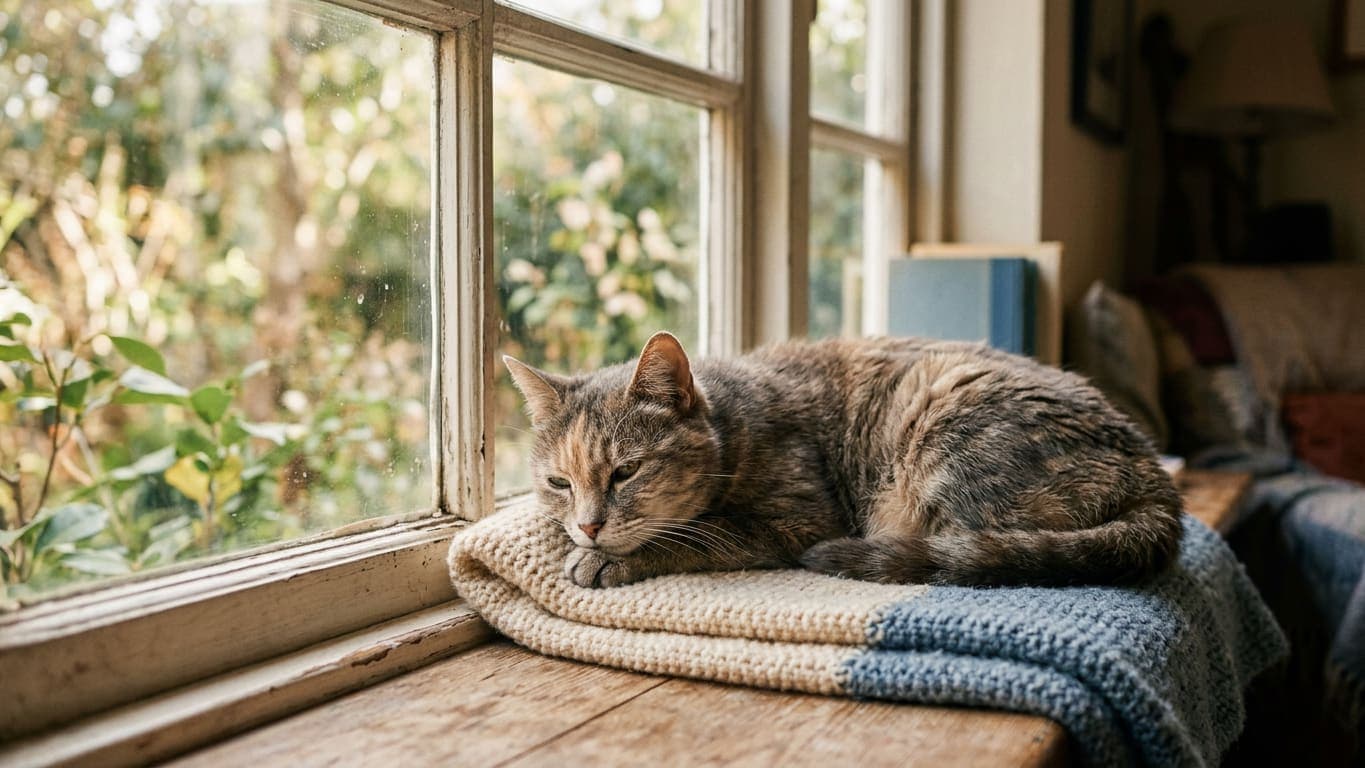
Most well-cared-for indoor cats live 13–17 years, and many reach 18–20 or beyond. Outdoor and indoor-outdoor cats typically live far less. That one difference — indoors versus outdoors — moves the number more than breed, diet, or anything sold in a bottle.
If you have just brought a kitten home, or you are looking at a greying cat on the sofa doing quiet arithmetic, this is the honest picture: cats are, in longevity terms, a genuine success story, and a lot of what extends a cat's life is settled, unglamorous, and free.
The actual numbers
There is no single "average," because it depends enormously on one factor we will come to. But as a working picture:
| Cat | Typical lifespan |
|---|---|
| Indoor, well cared for | 13–17 years, many 18–20+ |
| Indoor-outdoor | Low teens, highly variable |
| Outdoor / feral | Low single digits to low teens |
| Verified record-holders | Late twenties and beyond |
Put plainly:
- Indoor cats: commonly 13–17 years, with many reaching 18–20+.
- Outdoor / indoor-outdoor cats: dramatically shorter, often cited in the low single digits to low teens depending on environment.
- Verified extremes: the oldest documented cats have reached their late twenties and beyond — outliers, but real.
Breed matters less than people expect. A giant Maine Coon does not die meaningfully earlier than a small domestic shorthair — feline lifespan does not track body size the way canine lifespan does. Some pedigree breeds carry specific genetic disease risks (Maine Coons and Ragdolls for hypertrophic cardiomyopathy, Persians for polycystic kidney disease), which pulls their averages down, but size itself is not the driver.
The single biggest lever: indoors vs outdoors
If you take one thing from this article, take this. The gap between indoor and outdoor cat lifespans is one of the largest, most consistent effects in companion-animal health — and it is not subtle.
Outdoor cats face traffic, predators, territorial fights (and the abscesses and viruses those transmit, including FIV and FeLV), poisons, and parasites. None of these are slow diseases of aging; they are sudden, and they take cats young. Bringing a cat indoors — or providing safe, enclosed outdoor access ("catios," secure gardens) — is the closest thing to a lifespan intervention that exists for cats, and it costs nothing.
The levers that genuinely matter
After indoor living, the evidence points to a familiar, boring, effective list:
- Keep them lean. Obesity drives diabetes, arthritis, and a shorter life. A lean cat is a longer-lived cat. This is the same lesson as in dogs, where a controlled lifelong study showed leaner animals lived meaningfully longer.
- Neuter/spay. Beyond population control, it removes whole categories of risk (reproductive cancers, roaming, fighting) and is associated with longer life.
- Dental care. Feline dental disease is common, painful, and quietly systemic. It is under-treated because cats hide it.
- Screen early — from about seven. This is the one owners skip. The diseases that take older cats — chronic kidney disease, hyperthyroidism, heart disease — do their early damage silently. A blood panel on a healthy-seeming seven-year-old catches things while they are still manageable. A cat is mature at seven and senior at eleven; seven is the age to start looking, not the age to worry.
- Parasite and vaccine basics, appropriate to an indoor life, on your vet's advice.
Do cats age like dogs? Cat years vs dog years
Not quite. The old "one year equals seven" rule is wrong for both, and cats and dogs don't age on the same clock. A rough guide for cats: the first year takes a kitten to about 15 in human terms, the second year adds roughly nine more (so a two-year-old cat is a young adult of about 24), and each year after that is worth around four. By that maths a 16-year-old cat is comparable to a human in their eighties.
The bigger difference is between species. In dogs, body size drives lifespan hard — big dogs die years younger than small ones. In cats, size barely matters, which is why a large Maine Coon and a small shorthair have similar life expectancies. Cats also metabolise many drugs differently from dogs, which is why feline evidence has to be gathered separately rather than borrowed.
Where the longevity frontier fits
You may have arrived here after reading about rapamycin and pet longevity. Here is the honest placement: the geroscience is genuinely exciting, and it is genuinely unproven in cats. There is one small controlled rapamycin trial in cats, on safety, in animals with subclinical heart disease — not a lifespan result. No drug has been shown to extend a cat's life.
So the frontier is worth watching, and it is not where today's good years come from. Today's good years come from the boring list above, which has far better evidence than any compound we cover. If you want to understand where that research actually stands for cats specifically — what is claimed versus what is shown — our feline evidence hub lays it out, caveats intact.
The bottom line
Cats live a long time when we let them: indoors, lean, with clean teeth and early screening. That combination will do more for the number of years you get than anything sold in a bottle. When the science moves — and it is moving — we will tell you honestly, caveats intact.
Not sure where your cat sits or what to ask your vet? The evidence quiz takes five questions and points you to what actually applies to your animal.
Not veterinary advice. Talk to your veterinarian about your cat.
References
- Montoya M. et al. Life expectancy tables for dogs and cats derived from clinical data. Frontiers in Veterinary Science, 2023. Find on PubMed
- O'Neill D.G. et al. Longevity and mortality of cats attending primary care veterinary practices in England. Journal of Feline Medicine and Surgery, 2015. Find on PubMed
- Teng K.T. et al. Associations of body condition score with health conditions and lifespan in cats. Journal of Small Animal Practice, 2018. Find on PubMed
The content on this site is for informational purposes only and is not veterinary advice. These statements have not been evaluated by a food or drug regulatory authority and are not intended to diagnose, treat, cure, or prevent any disease. Always consult a licensed veterinarian about your pet's health.